API Insights
API Integration Services: The 2025 Playbook for Reliable Data Flows
Build dependable, observable integrations with the patterns we use across enterprise API programs—covering delivery semantics, retries, rollout, and operations.
If your customer experience depends on orders, fulfillment events, or telemetry moving across platforms, your integration layer is a product. This playbook captures how we ship reliable integrations for clients who work with API Integration Services and Custom API Development.
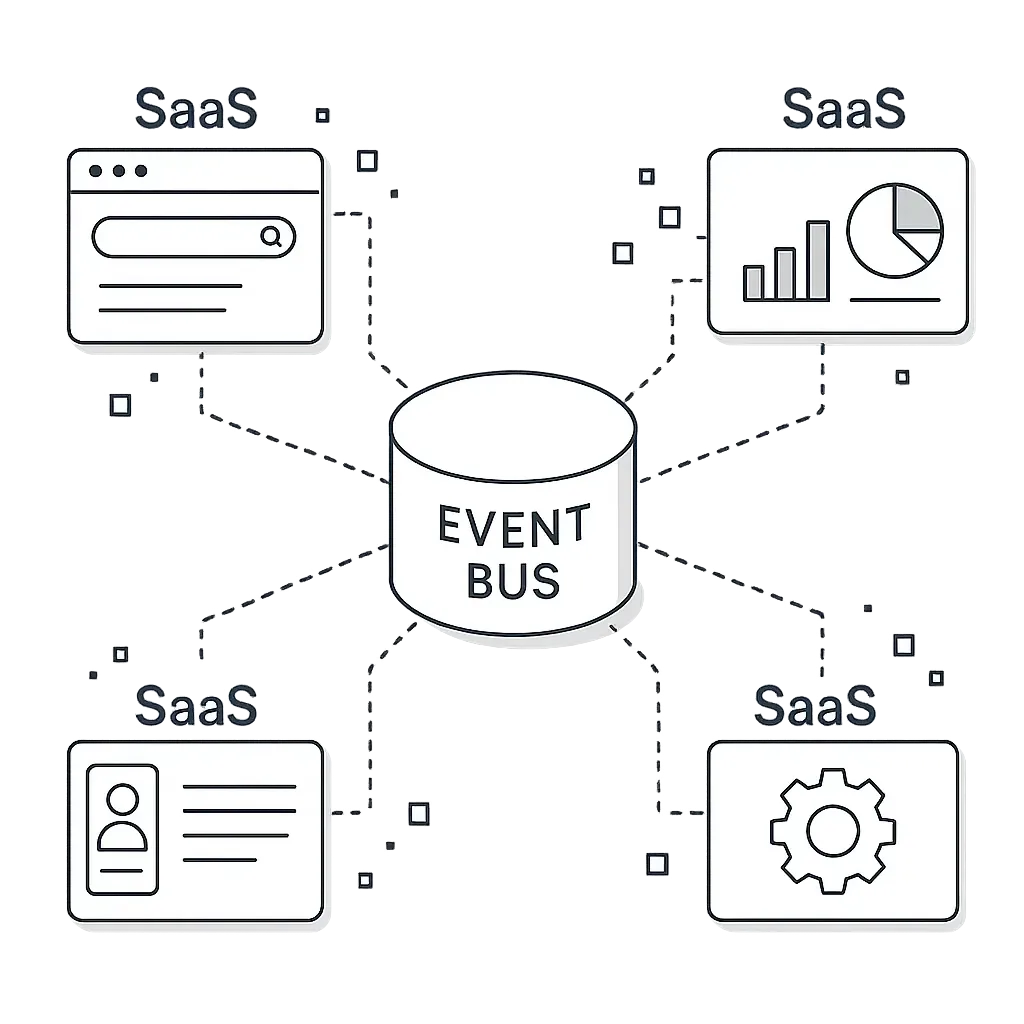
When integrations are a product
- Treat integrations as versioned assets with SLIs, SLOs, release notes, and user-visible changelogs.
- Advocate for consumer needs first: contract tests, predictable error semantics, and graceful back-pressure.
- Align delivery with product discovery → design → build → launch so stakeholders stay informed.
Core patterns to choose from
Webhooks vs polling
Prefer webhooks for low-latency updates and fall back to polling when the source cannot push or when you need verification/backfill. The strongest programs combine both for “notify-and-reconcile.” Our Webhooks & Eventing blueprint shows how we layer monitoring and replay on top of either model.
Idempotency everywhere
- Assign stable identifiers to every request and surface them to consumers.
- Require
Idempotency-Key(or equivalent) headers on all write operations. - Deduplicate at the ingestion edge and store replay-safe logs so that retries are harmless.
Retry strategies that will not amplify outages
- Use exponential backoff with jitter to avoid synchronized storms.
- Ship dead-letter queues (DLQs) and replay tooling for persistent failures.
- Apply circuit breakers and adaptive throttle policies per tenant so noisy neighbors do not drown the platform.
Data modeling & normalization
- Consolidate core objects—customer, order, product—behind a normalized schema.
- Communicate breaking changes early and offer additive migrations or versioned fields.
- Document transformations so downstream teams understand provenance and precision.
Authentication and authorization
Secure integrations should follow the API Security & Governance guidance:
- Prefer OAuth 2.0/OIDC with scoped permissions and short-lived tokens.
- Rotate client secrets automatically; revoke compromised keys through self-service dashboards.
- Align with the OWASP API Security Top 10 (2023) and plan for OAuth 2.1 changes (implicit grant removal, PKCE by default, refresh token rotation).
Observability: make operations boring
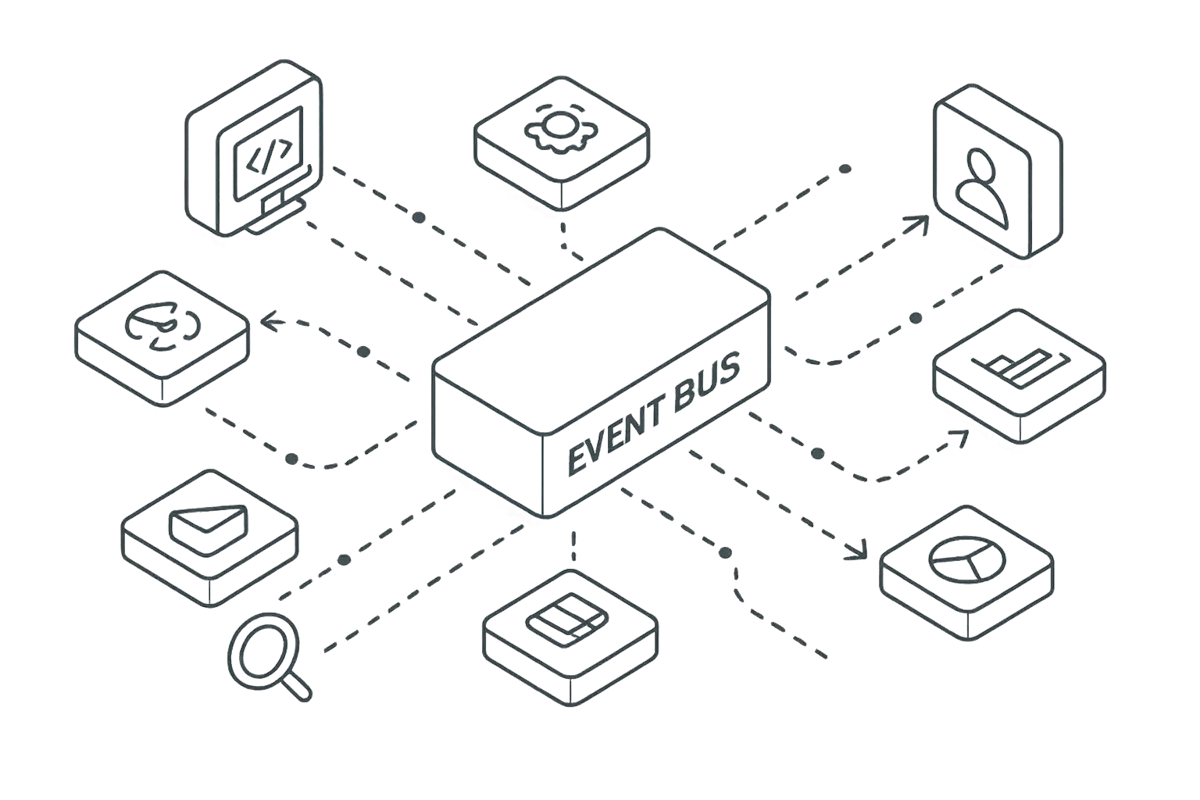
- Emit structured logs with correlation IDs covering producer → bus → consumer spans.
- Track metrics such as delivery latency, success ratio, retry counts, DLQ backlog, and replay outcomes.
- Trace entire flows so on-call engineers locate hotspots in seconds. We wire these foundations into every Node.js integration we deliver.
Deployment & rollout
- Shadow traffic new connectors before promoting to production.
- Ship feature flags for incremental rollout and safe rollback.
- Maintain runbooks covering incident response, replay windows, and stakeholder communications.
Common failure modes (and fixes)
- Duplicate deliveries: Build idempotent handlers, guard replays, and store dedupe caches at the edge.
- Event storms: Apply token buckets, per-tenant budgets, and adaptive retry windows that slow noisy consumers.
- Clock drift: Rely on server-side timestamps, reconciliation jobs, and signed payload metadata to restore order.
Call to action
Ready to modernize your integration program without firefighting? Explore API Integration Services, dig into the E-commerce API Integration playbook, or email us to scope the next project.
FAQ
Do I need webhooks or polling?
Use webhooks for real-time delivery and add polling for verification/backfill. Many resilient integrations combine both.
How do I make retries safe?
Make every write idempotent: require unique keys, dedupe at ingestion, and ensure downstream systems can replay without side effects.
What metrics matter most?
Delivery latency, success ratio, retry counts, and DLQ backlog all indicate integration health; build dashboards before go-live.
Need help implementing this?
Email us the context and we'll align the approach with your systems, teams, and timelines.