API Insights
Webhooks in 2025: Delivery Guarantees, Retries, and Replay Without the Pain
A production-grade webhook guide covering signatures, transport security, retries with DLQs, replay tooling, and SLOs your stakeholders can trust.
Webhooks still win for low-latency event delivery, but only when they are secure, idempotent, and observable. This 2025 guide distills the patterns we deploy across Webhooks & Eventing projects in tandem with API Security & Governance and API Integration Services.
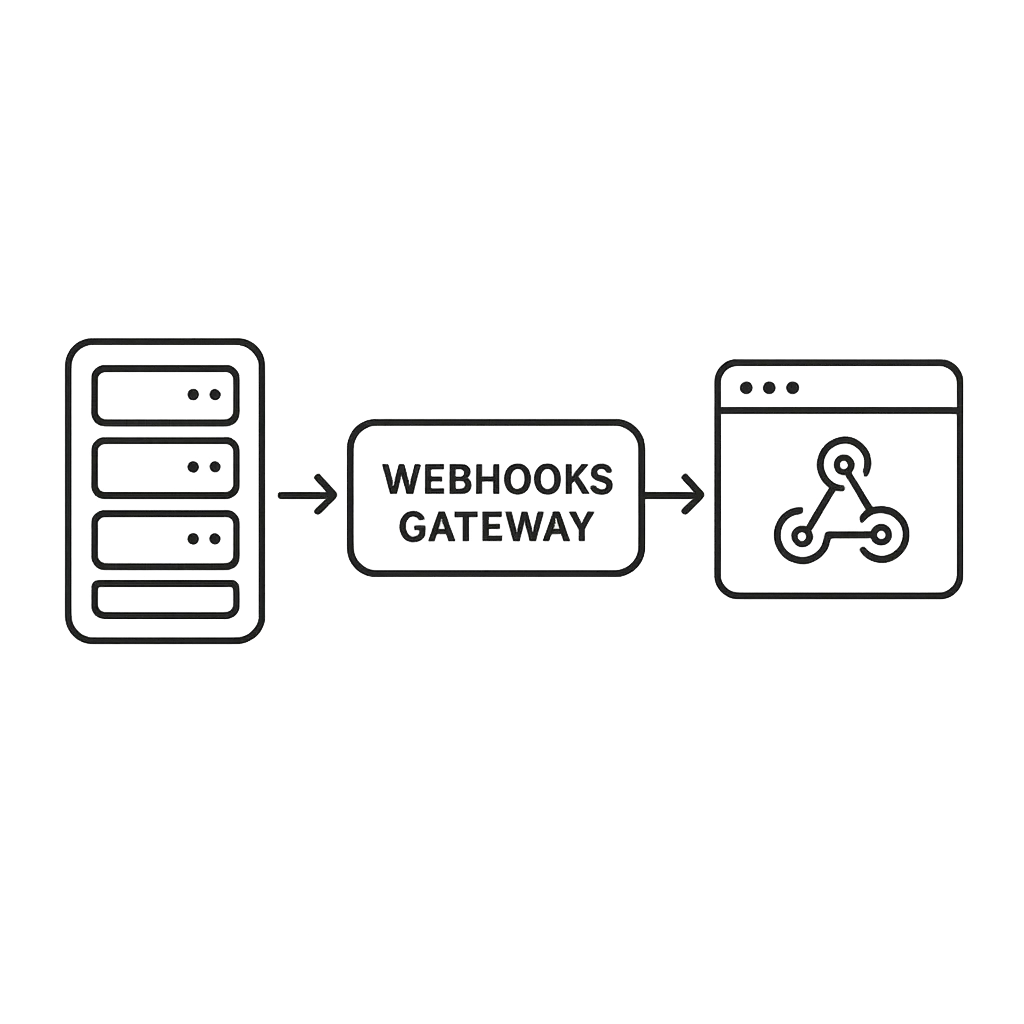
Why webhooks still win
- No constant polling—consumers get actionable updates within seconds.
- Lower infrastructure cost: push when events happen rather than on cron.
- Consumers can subscribe selectively and scale processing independently.
Security primitives
- Sign every payload (HMAC with timestamped signatures) and rotate secrets regularly.
- Consider mTLS, IP allow-lists, or zero-trust gateways for high-risk feeds.
- Scope OAuth permissions so consumers only receive the events they require.
- Validate inputs against the OWASP API Security Top 10 to block replay and injection attacks.
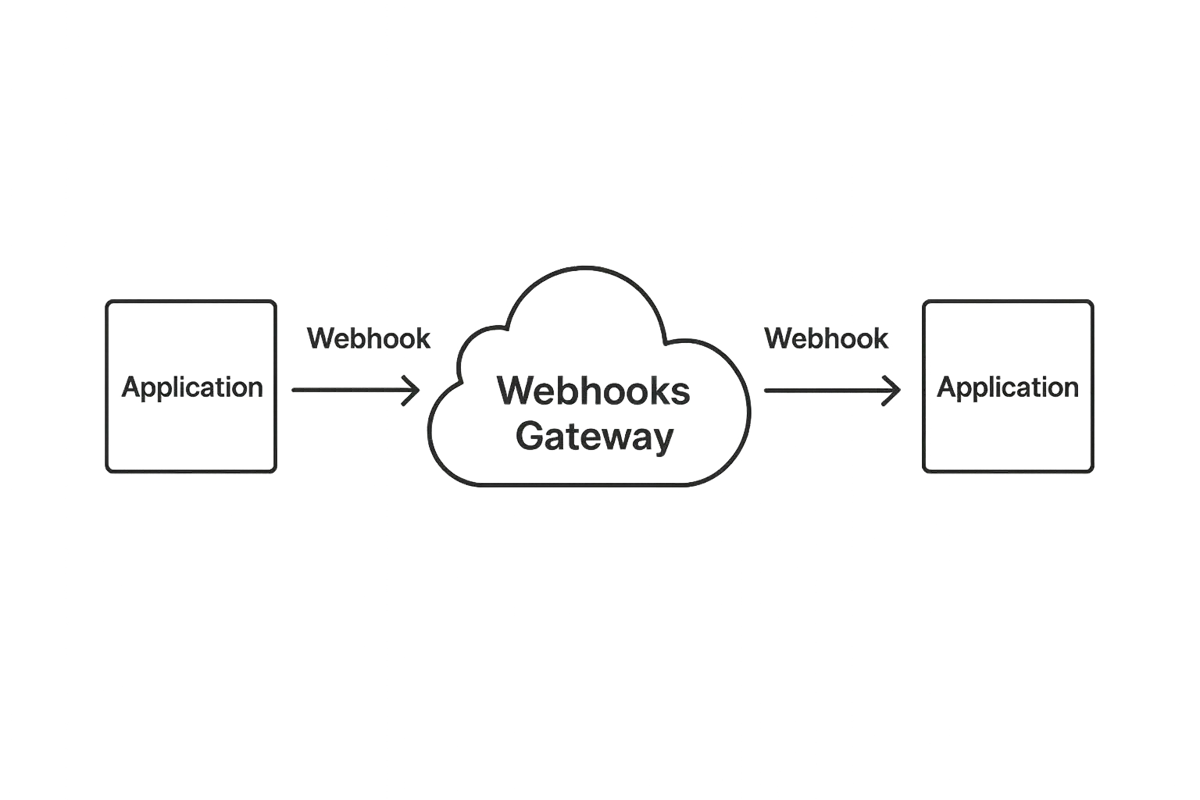
Delivery semantics
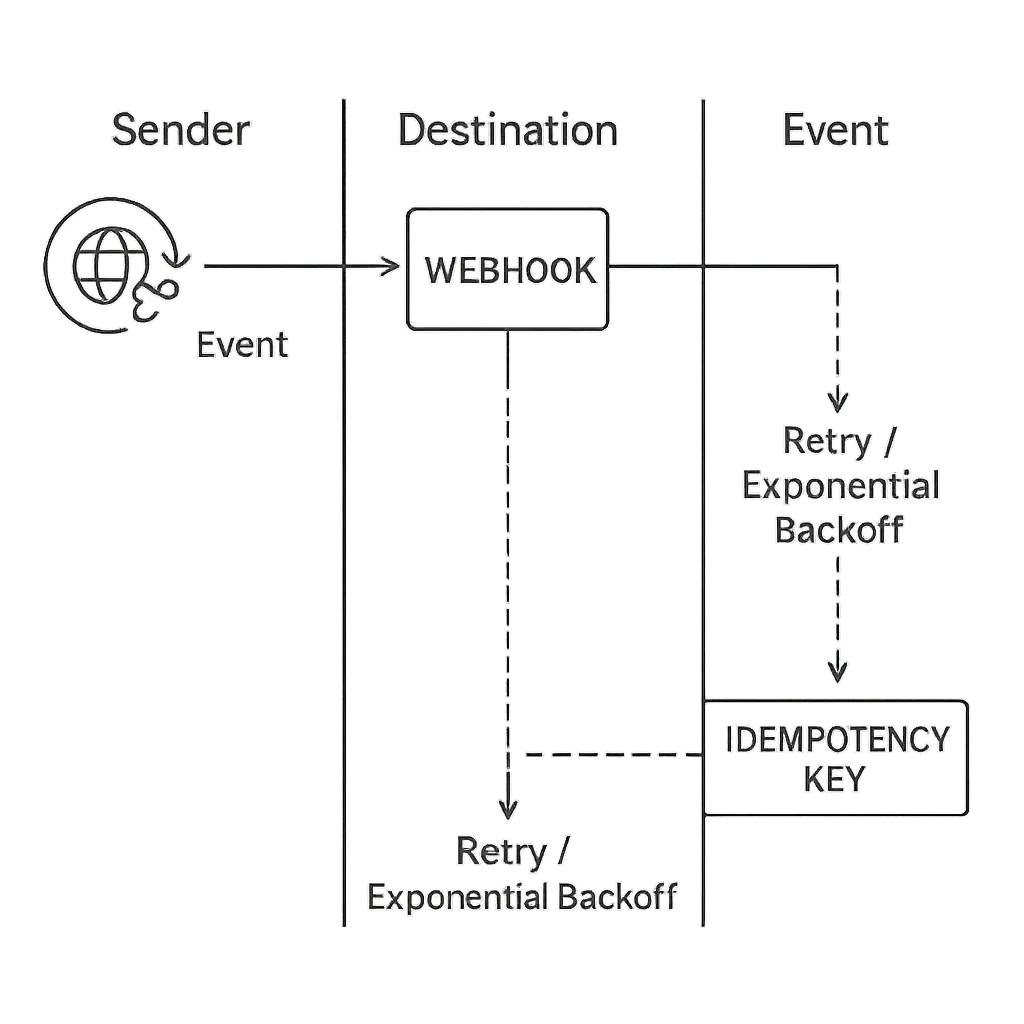
- At-least-once is the default; embrace it by enforcing idempotency keys and dedupe windows.
- At-most-once trades reliability for simplicity—reserve for non-critical notifications.
- Exactly-once can be approximated through idempotent handlers plus downstream dedupe tokens.
Retry architecture
- Implement exponential backoff with jitter and cap retry attempts.
- Route persistent failures to a DLQ, persist payload + metadata, and surface alerts.
- Ship replay tooling with tenancy filters, time windows, and audit history.
- Define SLOs for endpoint response times (e.g., 95% under 2 seconds) and time-to-consistency.
Observability
- Propagate correlation IDs from emitter → gateway → consumer so traces link across services.
- Emit structured logs and custom metrics: delivery latency, retry counts, DLQ backlog, replay success rate.
- Use distributed tracing (OpenTelemetry or equivalent) to find hotspots when consumers spike failures.
- Bundle these foundations with your Custom API Development roadmap to keep incidents rare.
Rollouts and testing
- Require verification endpoints during app install to validate signatures and scopes.
- Shadow new consumers with record-and-replay before flipping traffic.
- Provide a “force failure” toggle so teams can practice incident response safely.
- Backfill via polling plus reconciliation jobs when upstream sources allow historical export.
FAQ
How do I prevent duplicate processing?
Treat idempotency keys as a first-class requirement and store dedupe windows long enough to cover worst-case retries.
How should I authenticate webhooks?
Prefer signed payloads with rotating secrets; add mTLS or IP allow-lists for sensitive feeds.
How do I test failures safely?
Expose a test endpoint or switch that forces non-2xx responses and observe the retry and replay pipeline end-to-end.
Need help implementing this?
Email us the context and we'll align the approach with your systems, teams, and timelines.